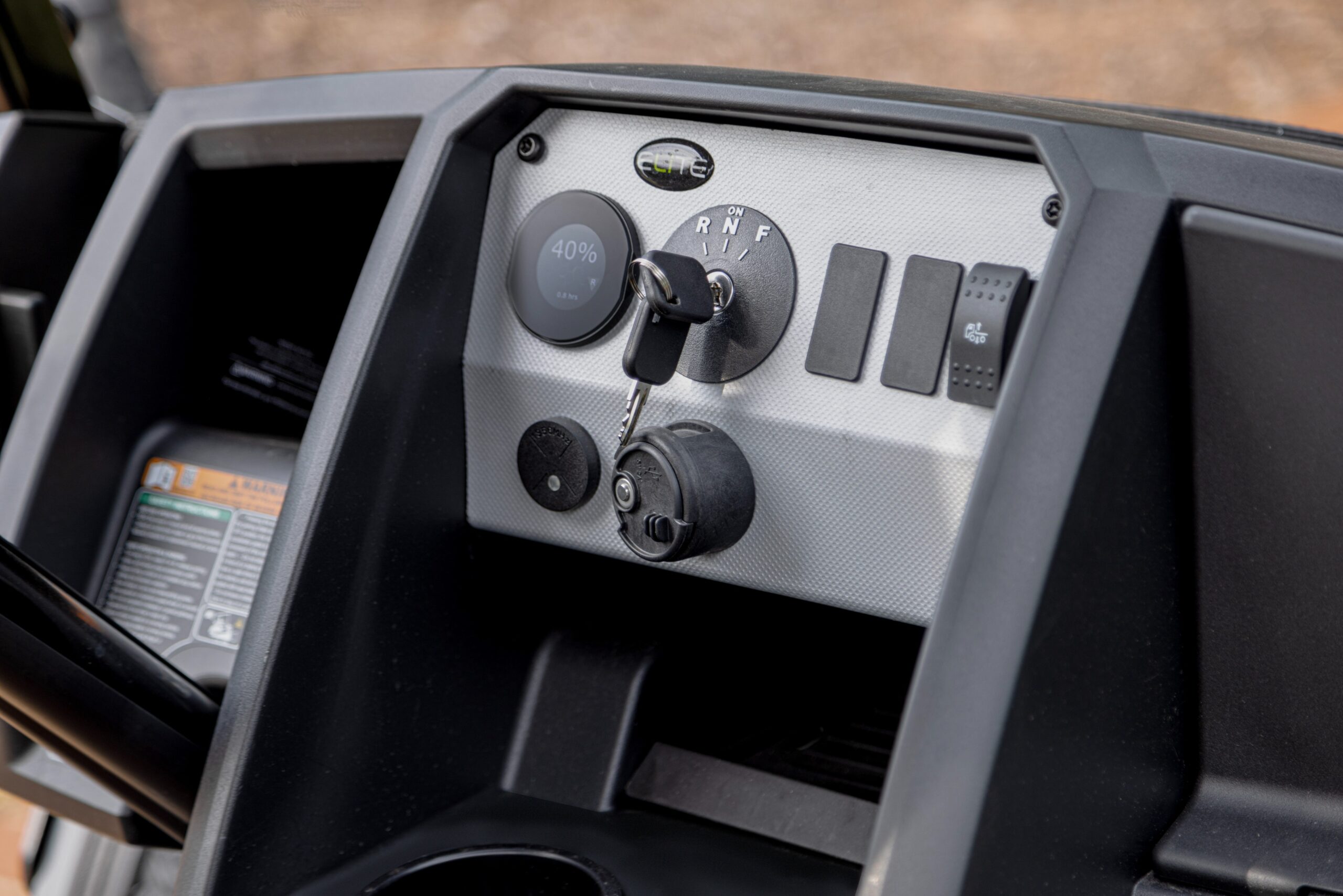
In the world of utility vehicles, performance isn’t just about motors or payload; it comes down to one critical component: the battery.
For operators using vehicles like the Cushman Hauler, reliability, uptime, and running costs are everything. That’s where the partnership between E‑Z‑GO and Samsung SDI stands apart, delivering lithium technology engineered specifically for E-Z-GO and Cushman utility platforms.
A partnership built for working vehicles.
Unlike generic “drop-in” lithium batteries used across multiple brands, Samsung SDI cells are developed in collaboration with E-Z-GO for their vehicles — including the Cushman range.
This isn’t just a supply agreement. It’s a fully integrated approach where:
- Battery design matches vehicle demands
- Power delivery aligns with real workloads
- Systems are engineered to work together, not just fit together
For operators, that translates into something simple: predictable performance under pressure.
What this means for Cushman Hauler users.
Vehicles like the Cushman Hauler are built for daily work, including estates, facilities, councils, and logistics sites, where stopping isn’t an option.
With Samsung SDI lithium technology, that results in:
- Longer run times without increasing vehicle size or weight
- Consistent power delivery, even under load or across long shifts
- Integrated battery management systems (BMS) optimised for safety, charging, and efficiency
- Reduced downtime, thanks to reliable charge cycles and fewer failures
This is where purpose-built systems outperform retrofitted solutions.
The Samsung SDI advantage.
Samsung SDI brings serious scale and credibility to the partnership.
With billions invested in R&D and global production capacity, their lithium technology is developed at a level most utility vehicle manufacturers simply can’t replicate internally.
But the real advantage isn’t just the tech — it’s how it’s applied.
By combining:
- E-Z-GO’s vehicle engineering
- Samsung SDI’s cell technology
…the result is a battery system designed from the ground up for utility use — not adapted as an afterthought.
Lithium vs traditional power options.
1. Lithium vs lead-acid.
For working vehicles, lead-acid is increasingly hard to justify:
- Higher energy density → more usable power in less space
- Zero maintenance → no watering, no corrosion issues
- Longer lifespan → up to 4× longer than lead-acid
- Weight reduction → less strain on components and surfaces
2. Lithium vs petrol.
For many sites, petrol is still common — but it comes with trade-offs:
- Lower running costs with electric charging
- Quieter operation for noise-sensitive environments
- No emissions at the point of use
- Fewer moving parts, meaning less maintenance
3. Integrated lithium vs generic drop-in batteries.
This is where the biggest difference lies.
Generic lithium packs:
- Designed to fit multiple brands
- Limited optimisation
- Often rely on basic battery management
Samsung SDI + E-Z-GO systems:
- Purpose-built for the vehicle platform
- Advanced thermal and charge management
- Optimised performance and efficiency under load
In real terms, that means fewer issues, better performance, and longer system life.
Why this partnership stands out in the utility sector.
Most utility vehicle manufacturers rely on third-party battery solutions that are adapted to fit.
E-Z-GO and Cushman take a different approach.
By working directly with Samsung SDI, they’ve created a system where:
- Battery and vehicle are engineered together
- Performance is consistent and predictable
- Operators get a solution designed for real workloads
For fleet managers, that reduces risk — and that matters more than specs.

The bottom line.
For vehicles like the Cushman Hauler, battery technology isn’t just a feature; it defines how the vehicle performs day in, day out.
Through their partnership, E‑Z‑GO and Samsung SDI deliver:
- Longer operating range
- More consistent performance under load
- Lower maintenance requirements
- Reduced total cost of ownership
- Greater reliability across demanding environments
This isn’t just about lithium versus lead-acid.
It’s about purpose-built systems replacing compromise — and setting a new standard for electric utility vehicles in real working conditions.