Mistake #2: Ignoring terrain and real-world working conditions.
On paper, many utility vehicles look broadly similar. Payload figures line up, engine specs sound impressive, and everything appears capable enough. Then the vehicle meets real ground conditions, and the problems begin.
Ignoring terrain and day-to-day working conditions is a classic error, and one that’s entirely avoidable.
Why terrain is more important than power.
Buyers often focus on horsepower or towing capacity, assuming more power automatically equals better performance. In reality, terrain capability is usually dictated by factors such as:
- Drivetrain configuration
- Ground clearance
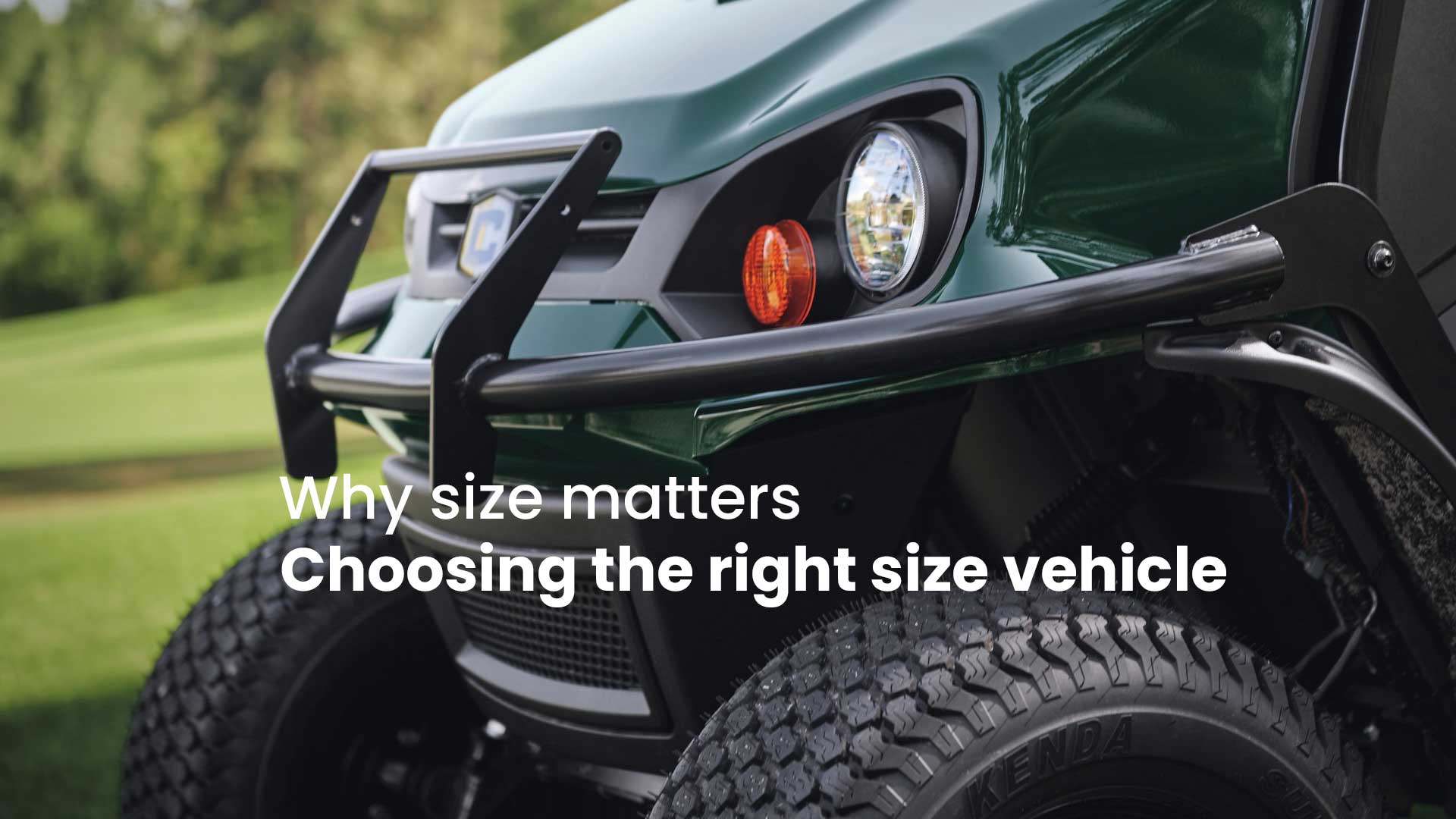
- Tyres
- Suspension design
- Weight distribution
A powerful vehicle with poor traction is still a liability once conditions deteriorate.
Common terrain mismatches.
Mud, wet grass, and soft ground.
Vehicles designed primarily for hardstanding struggle badly once surfaces soften. Symptoms include:
- Wheelspin under load
- Bogging down when turning
- Excessive tyre wear
If your site includes fields, estates, or unmade tracks, this is non-negotiable.
Slopes and uneven ground.
Many operators underestimate gradients because they “don’t look that steep”.
In reality:
- Centre of gravity matters
- Braking downhill is just as important as climbing
- Load placement becomes critical
Choosing a vehicle without considering slope stability can be dangerous, not just inconvenient.
Hard surfaces and mixed environments.
Conversely, vehicles optimised for off-road use can be unpleasant and inefficient on concrete or tarmac:
- Aggressive tyres increase noise and wear
- Suspension may feel harsh
- Fuel or battery consumption rises
If your vehicle splits time between yard work and off-road tasks, compromise must be carefully managed.
The hidden cost of “it’ll probably be fine”.
This mindset costs money.
Poor terrain matching leads to:
- Increased recovery call-outs
- Premature drivetrain wear
- Reduced operator confidence
- Slower job completion times
Over a long-term rental or ownership period, these costs add up quickly.
Questions you should be asking.
Before committing to a vehicle, consider:
- What does the ground look like after heavy rain?
- Will it operate year-round or seasonally?
- Are operators carrying loads uphill or across slopes?
- Will tyres be changed, or must they cope with everything?
If a dealer can’t answer these clearly, that’s a warning sign.